
The Ins and Outs of Breast Lifts
1st Nov 2021
| |||||
What is a Breast Reduction? | |||||
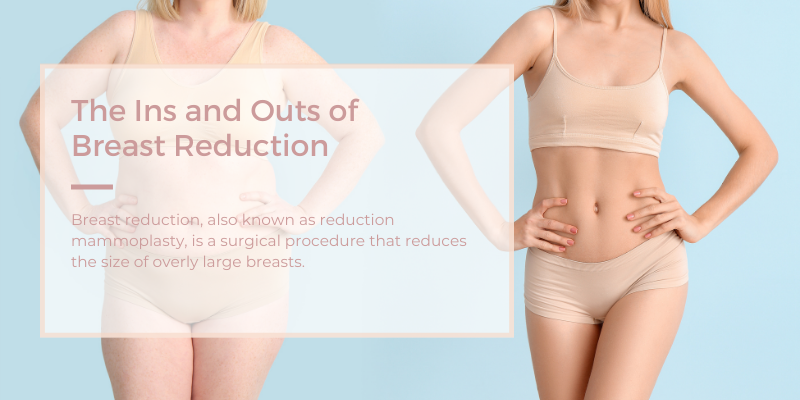
Breast reduction, also known as reduction mammoplasty, is a surgical procedure that reduces the size of overly large breasts. Overly large breasts can cause health issues and emotional problems for some women. In addition to self-image issues, it can also cause physical pain and discomfort. Breast reduction surgery removes excess breast fat, glandular tissue, and skin to achieve a breast size in proportion with your body. The procedure is designed to alleviate the discomfort associated with overly large breasts. | |||||
Is it right for you? | |||||
Breast reduction is a highly individualised procedure and may not be suitable for everyone. Always talk to your Specialist Plastic Surgeon before making a decision. Your Specialist Plastic Surgeon will assess your condition and general health, and plan the treatment that is best suited to you. Before you decide on breast reduction surgery, there are some important issues to keep in mind:
| |||||
Breast reduction may be a good option for you if:
|
You may be given medicines to take before the surgery, such as antibiotics.
Questions your surgeon may ask before the surgery include:
- Do you have an allergy or bad reaction to antibiotics, anaesthetic drugs, or any other medicine?
- Do you have prolonged bleeding or excessive bruising when injured?
- Do you have a connective-tissue disorder such as rheumatoid arthritis, scleroderma, lupus erythematosis, or any other arthritis-like disorder?
- Do you have any long-term or recent illnesses?
- Have you previously had surgery for breast cancer, or radiotherapy to the breast?
- Have you had psychological or psychiatric illnesses?
- Unless your surgeon advises differently, you will be able to continue taking most medicines that you have been taking.
Unless your surgeon advises differently, you will be able to continue taking most medicines that you have been taking.
Your surgeon will advise you if any other tests are required, such as blood tests, X-ray examinations or an Electrocardiograph (ECG) to assess your heart.
Prepare a “recovery area” in your home. This may include pillows, ice packs, a thermometer and a telephone within easy reach. Make sure you arrange for a relative or friend to drive you to and from the hospital or clinic. Someone should also stay with you for at least 24 hours after you return home.
Your surgeon should give detailed preoperative instructions. Follow them carefully.
What to do After Surgery:
While you are healing, you may experience some pain, bruising, swelling and numbness around the operated site. This is normal. Your Specialist Plastic Surgeon will prescribe pain relief as needed. If you have any problems or concerns, be sure to tell your surgeon.
After surgery, you will wear an elastic dressing or surgical bra to provide support for your breast. A plastic tube may be inserted into each breast to drain excess fluid. Other dressings may be changed or removed at this time.

Depending on the extent of your procedure, you may need to take a few days off work to rest. Avoid heavy lifting, strenuous exercise, swimming and strenuous sports until advised by your surgeon.
SMOKING: Do not smoke. Smoking contributes to wound breakdown and delayed healing along with other health problems.
If you experience any of the following symptoms, notify your surgeon immediately:
- Temperature higher than 38ºC or chills
- Nausea, vomiting, shortness of breath or diarrhea
- Heavy bleeding from the incisions
- Leakage of blood or fluid beyond the first day after surgery
- Worsening and/or spreading redness around the incision sites
- Increasing pain or tenderness in either breast
- Any other concerns or problems regarding your surgery, particularly if it appears to be worsening
Your surgeon will give you specific instructions on post-operative care. These instructions may include:
- How to care for your surgical site(s) following surgery
- Medications to apply or take orally to aid healing and reduce the risk of infection
- Specific concerns to look for at the surgical site(s) or regarding your general health
- When to follow-up with your surgeon
Be sure to ask your surgeon specific questions about what you can expect during your individual recovery period, such as:
- Where will I be taken after my surgery is complete?
- What medication will I be given or prescribed after surgery?
- Will I have dressings/bandages after surgery? If so, when will they be removed?
- Are stitches removed? When have they/will they be removed?
- When can I resume normal activity and exercise?
- When do I return for follow-up care?
What about Scarring?
Scars are an inevitable part of any invasive surgery. Your Specialist Plastic Surgeon will endeavour to minimise scarring and to keep your scars as inconspicuous as possible by locating the incisions in easily hidden sites. That way, scars will be along natural skin lines and creases. Scars may fade with time and become barely noticeable. If you are prone to scarring, you should advise your surgeon.
At Exquisite Bodies we have you covered not only with post-surgical garments but we like to ensure that you are well taken care of after your surgery, and this includes scar care. View our scar care range here.

| At Exquisite Bodies we offer a range of high-quality post surgical, compression garments and scar care to aid in your post surgical recovery. Contact Exquisite Bodies on 1300 855 617 or visit the range here. Or contact us for more info. | |
| If you are a plastic surgery clinic and would like more information on becoming a stockist of our post-surgical range fill in the form or phone 1300 855 617. Be sure to phone us before placing your first online order, so we can adjust your pricing. Shipping is FREE when clinics order online. | |
| Ref: Australian Society of Plastic Surgeons - plasticsurgery.org.au/ |